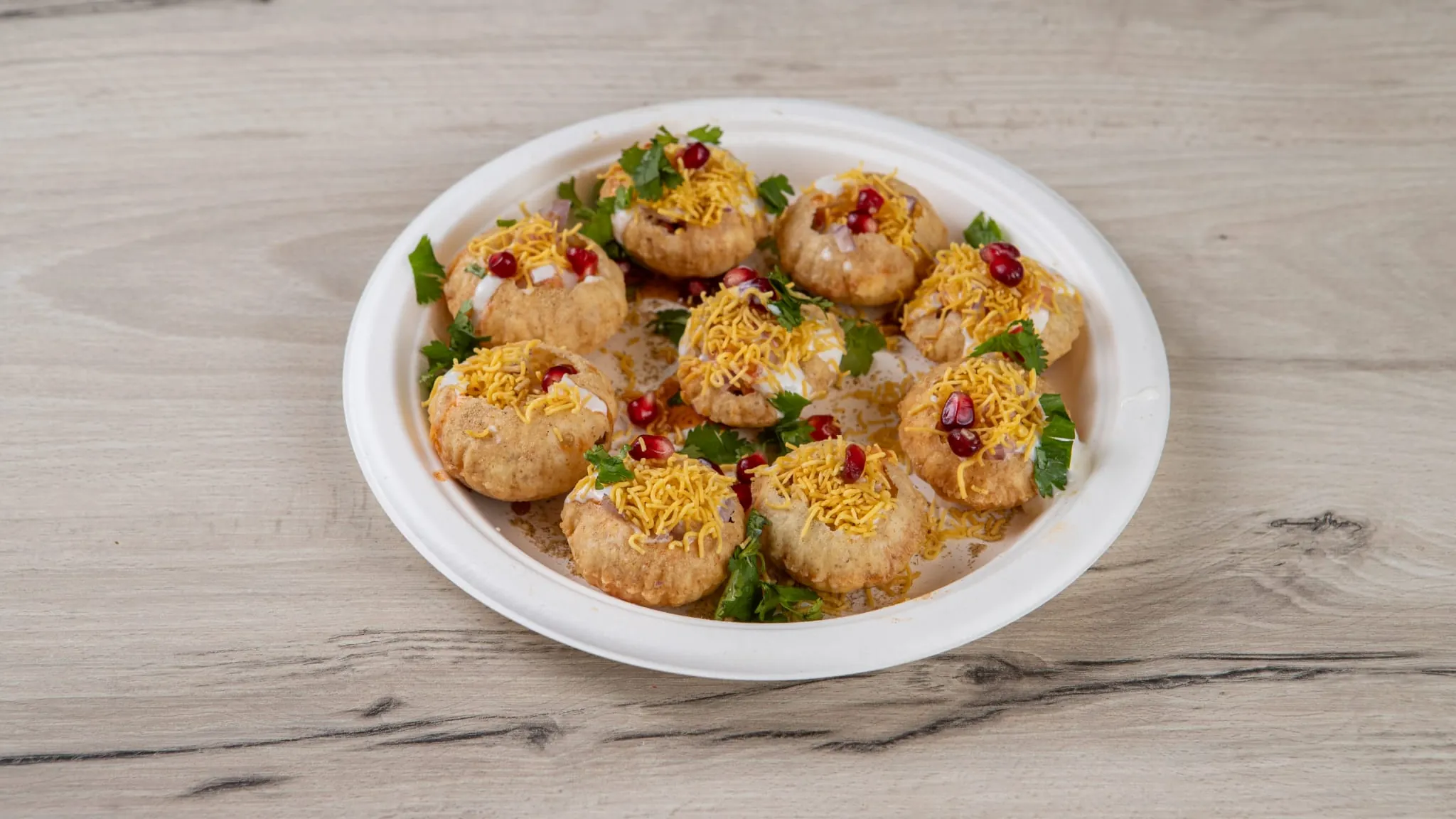
Dabeli is a street snack from Kutch, in the north-west of Gujarat. A soft bun is split and filled with a sweet, tangy and spicy potato mix, then finished with peanuts, pomegranate, chutney and sev. It is small, warm and full of contrasts. At GJ Chowk in Brampton we serve it as Dabeli (Kutchhi Dabeli), and paired with vada pav in our Vadapav & Dabeli combo. Our post on locho and dabeli gives the short version. This one goes deeper.
Where dabeli comes from
Kutch is a large, dry district in the far north-west of Gujarat. Its full name, kutchi dabeli, ties the snack to that region, and the port town of Mandvi in Kutch is often named as its home. The word dabeli is usually explained as "pressed" in Gujarati, after the way the filling is pressed into the bun. From Kutch it spread across Gujarat and to Mumbai, and today you will find it wherever Gujarati street food is sold.
What goes into a dabeli
The filling
The heart of a dabeli is boiled potato mashed with dabeli masala. This spice blend usually brings warm spices such as coriander seed, cumin, cinnamon and cloves, along with dried red chilli. Tamarind and dates add the sweet and sour side. The result tastes very different from a plain spiced potato.
The bun
Dabeli uses pav, a soft white bun. It is sliced, filled, and often warmed on a flat griddle with butter so the outside turns lightly crisp while the inside stays soft.
The toppings
Our Dabeli (Kutchhi Dabeli) is spiced sweet-and-tangy potato filling stuffed in soft buns with masala peanuts, pomegranate pearls, fine nylon sev and date-tamarind chutney. The peanuts and sev give crunch, and the pomegranate adds small bursts of fresh sweetness.
How dabeli tastes
A good dabeli hits several notes in one bite: sweet from dates and tamarind, sour from the chutney, heat from the masala, salt from the sev, and the soft-crunchy mix of bun, potato and peanuts. That balance of sweet, sour and spicy runs through a lot of Gujarati food. Our beginner's guide to Gujarati food explains why.
Dabeli vs vada pav
People often compare dabeli with vada pav, the potato bun from Mumbai. They look alike from the outside, but they are built differently.
- Vada Pav: a crispy spiced potato ball coated in chickpea batter and fried, tucked into a soft bun with fiery red garlic chutney and green chilli chutney. It is savoury and hot.
- Dabeli (Kutchhi Dabeli): the potato is not battered or fried. It is mashed with dabeli masala and chutney, so it is sweeter and tangier, with peanuts and pomegranate for texture.
If you cannot choose, our Vadapav & Dabeli combo is 1 Bombay Vada Pav and 1 Kutchhi Dabeli, so you can taste them side by side.
How to eat dabeli
Dabeli is at its peak hot and fresh, while the sev is still crunchy and the bun is still warm. If you order for pickup, eat it soon after you collect it. A cup of Masala Chai works well with it in cooler weather, and a chilled Masala Chaash cools the spice on a warm day.
Jain, Swaminarayan and Farali options are available — ask when you order.
More Gujarati and Mumbai street food to try
If you like dabeli, these are good next steps from our Street Favourites and Surti Farsan sections:
- Pav Bhaji: a spiced mash of vegetables, tomatoes and potatoes cooked on a big tawa with butter, served with two warm griddled buns.
- Sev Usad (Sev Usal): a spicy dried green pea stew from Vadodara, served hot with ratlami sev, onions and soft pav.
- Surti Locho: a warm, soft steamed gram-flour dish from Surat with butter, locho masala and sev.
You can order online for pickup at 90 Kennedy Rd S, Unit 5, or see the full menu.