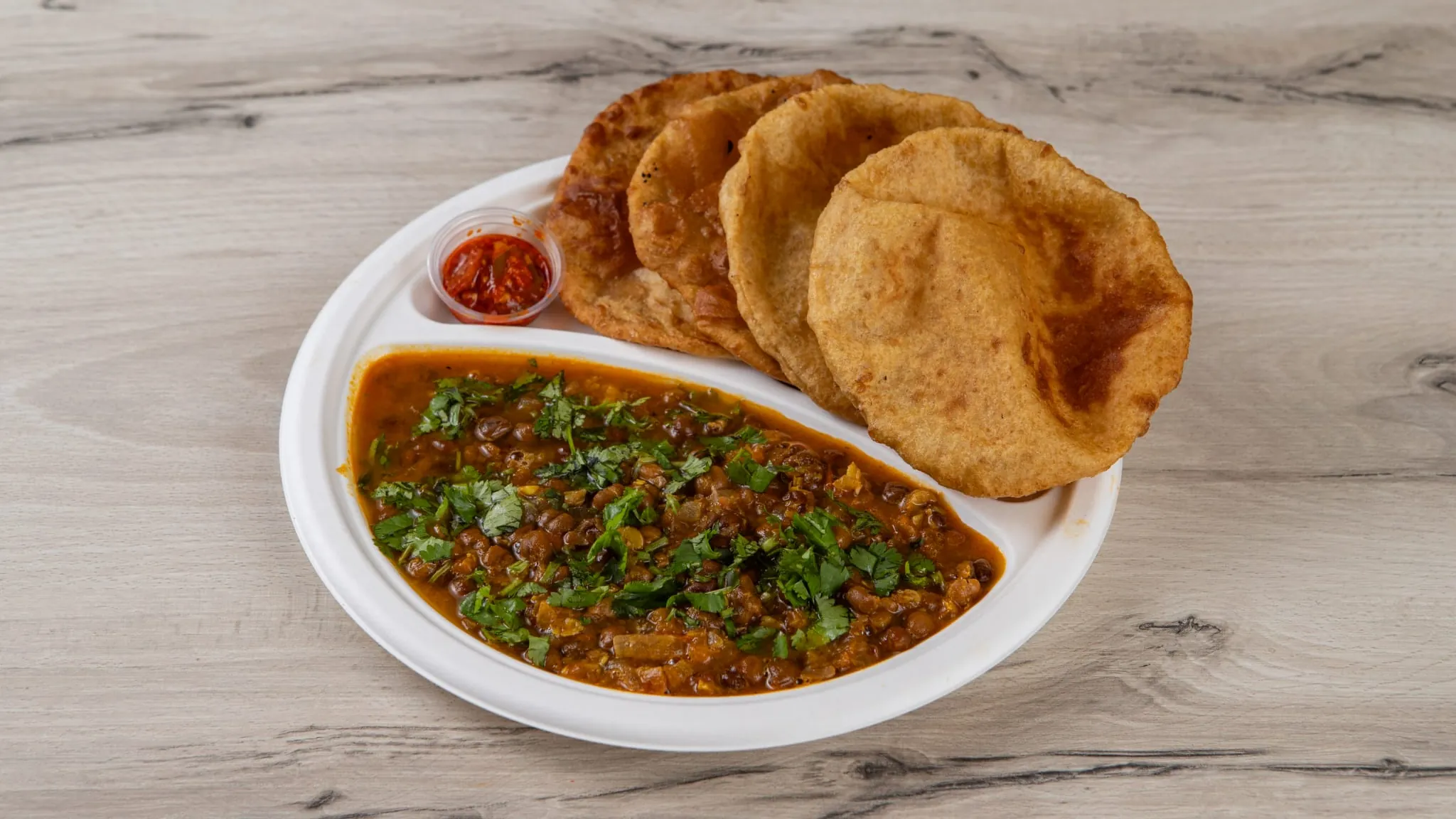
A Gujarati thali is a full meal served on one large plate. Small bowls of dal, kadhi and vegetables sit around rotli, rice, a snack and something sweet, so you get a little of everything at once. If you are new to Gujarati food, a thali is the easiest way to taste the whole cuisine in one sitting. At GJ Chowk in Brampton, ours is the Gujarati Thali, found under Traditional Meals & Thali on our menu.
What "thali" means
Thali is the word for the plate itself, usually a round steel plate with a raised rim. The small bowls that sit on it are known as katori. Over time the word came to mean the meal too, so ordering "a thali" means ordering a set meal with several dishes. Thalis are found across India, and each region fills the plate in its own way.
What's on our Gujarati Thali
- Two fresh daily shaak (vegetable curries)
- Sweet-tangy Gujarati dal
- Kadhi
- Fragrant rice
- 4 fresh rotlis
- Farsan
- Papad and pickle
- A sweet
The shaak change from day to day, so the plate is a little different each time you order.
Each part of the plate
Shaak
Shaak is the Gujarati word for a vegetable dish. It can be dry, like spiced potatoes, or cooked in a light gravy. Home cooks choose shaak by the season, which is why ours are daily.
Dal
Gujarati dal is usually made with toor dal and has a gentle sweet-and-sour taste. Cooks often add jaggery for sweetness and kokum, lemon or tamarind for sourness. It is thinner than many other dals, so it goes well over rice.
Kadhi
Kadhi is a warm curry of yogurt or buttermilk thickened with gram flour and tempered with spices. The Gujarati version is pale, smooth and often mildly sweet. Many people pour it over rice.
Rotli and rice
Rotli is a thin, soft whole wheat flatbread, often brushed with ghee. Rice is served alongside, ready for the dal and kadhi.
Farsan, papad, pickle and sweet
Farsan is a savoury snack such as khaman or dhokla (see khaman vs dhokla explained). Papad adds crunch, pickle adds a sharp, salty kick, and the sweet rounds out the meal.
How to eat a Gujarati thali
There is no strict rule, but a common order goes like this:
- Start with rotli. Tear a piece and use it to scoop up the shaak.
- Taste the farsan, papad and pickle between bites.
- Move on to rice with dal or kadhi poured over it.
- Enjoy the sweet whenever you like. In Gujarati meals it is often eaten alongside the rest, not only at the end.
Many people eat a thali with their hands, using the right hand, but a spoon is fine too. Mix and match: a bite of sweet dal with a bit of sharp pickle is part of the fun.
Smaller plates from the same kitchen
If a full thali is more than you want, these dishes from Traditional Meals & Thali give you part of it:
- Shak Rotli: a daily homestyle seasonal vegetable curry with 4 freshly puffed wheat rotlis.
- Daal Bhaat: sweet-tangy toor dal simmered with peanuts, jaggery and kokum, over hot basmati rice.
- Khichdi Kadhi: warm yellow khichdi served with hot, sweet and sour Gujarati buttermilk kadhi.
For extra bread, add Rotli (5pc) or Thepla (5pc) from Fresh Breads.
Thali for every day and for groups
A thali-style meal is also the idea behind our tiffin service, with daily dabba plans for pickup. For events, our catering includes a full thali buffet. Jain, Swaminarayan and Farali options are available — ask when you order.
You can order online for pickup at 90 Kennedy Rd S, Unit 5, or see the full menu.